
Rockcastle, and the general Land Between the Lakes community, has another cellular tower on the way.
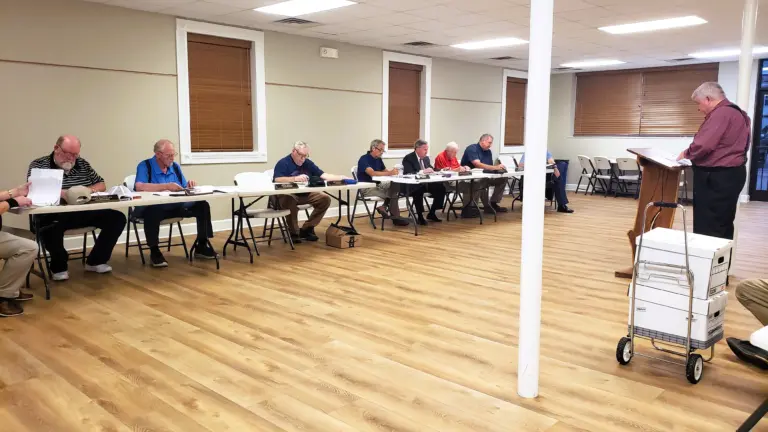
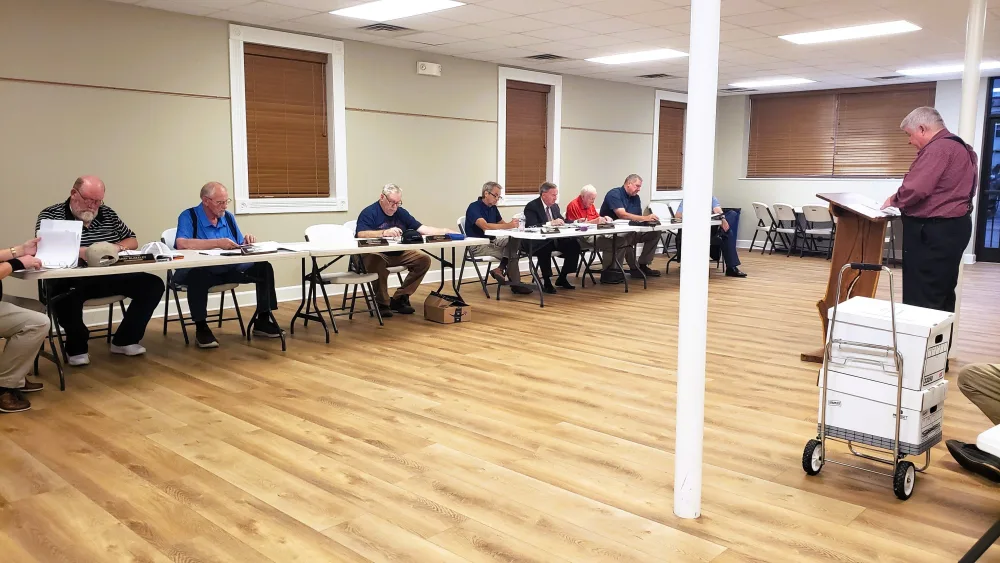
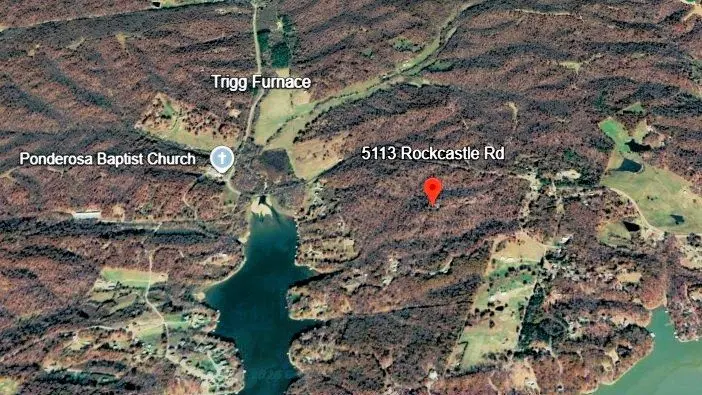
Following a 45-minute public hearing Tuesday night, the Cadiz-Trigg County Planning and Zoning Commission approved a 195-foot monopole structure and four-foot lightning arrester to be placed at 5113 Rockcastle Road — courtesy of APC Towers and its primary service agent, T-Mobile.
Legal representative Keith Brown, of Pike Legal in Shepherdsville, said the site will offer co-location for other potential wireless carriers — such as AT&T and Verizon — and increased service in the Rockcastle, Rockcastle Shores, Trigg Furnace and Ponderosa areas.
According to documents submitted to both the commission and state officials, the monopole will be fabricated by TransAmerican Power Products and is designed by Michael Plahovinsak, an independent engineer of Plain City, Ohio. He writes that the structure will withstand three-second sustained wind gusts of at least 106 miles per hour — and that loads reaching twice the designed wind pressure would be required for “Act of God” failures.
Brown noted that, other than major subdivisions, Trigg County has no planning and zoning ordinances outside of the Cadiz city limits, while state and federal laws have more encumbrance for cellular networking.
Brown also noted that of the soon-to-be 19 cellular towers in Trigg County , 17 of them will be taller than this one — meaning it will be one of the community’s shortest — and added the property will have a 15-foot by 20-foot concrete pad for a base, as well as a 60-foot by 60-foot “fenced compound.”
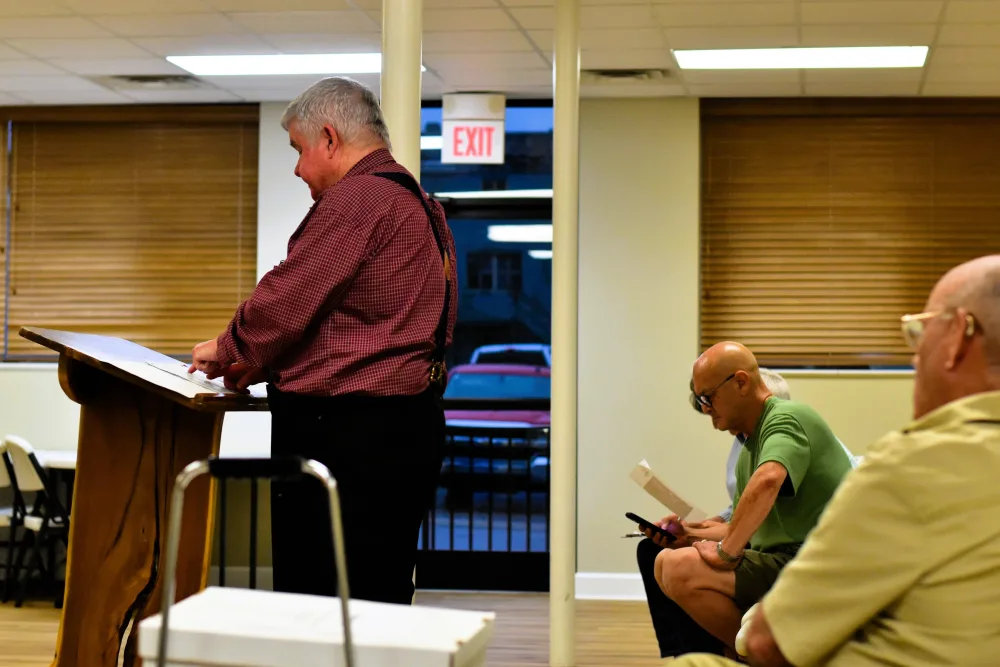
A handful of representatives from the nearby Trigg Wood Subdivision, however, spoke against its construction and for a number of reasons, including Cindy Natsch — who noted that:
+ federal guidelines on cell towers hadn’t changed enough since 1996
+ that 200-foot poles came with more degrees of federal difficulty
+ that some residents in the tower’s range allegedly weren’t notified of intent
+ that both the International Firefighter Association, as well as many school districts across the nation, require such construction be at least 1,500 feet from their entrances, due to various safety concerns
+ and that 5G radiation needed a “stronger look,” for public health’s sake.
However, the commission’s lawyer, Hopkinsville’s Steven Underwood, affirmed that the Cadiz-Trigg County Planning & Zoning Commission can only answer to law — with zero authority on emissions and radio frequencies.
Daniel Mullen, also of Trigg Wood subdivision, said it was “relatively not a concern, unless someone is living within 1,500 feet of it.”
Underwood, again, clarified.
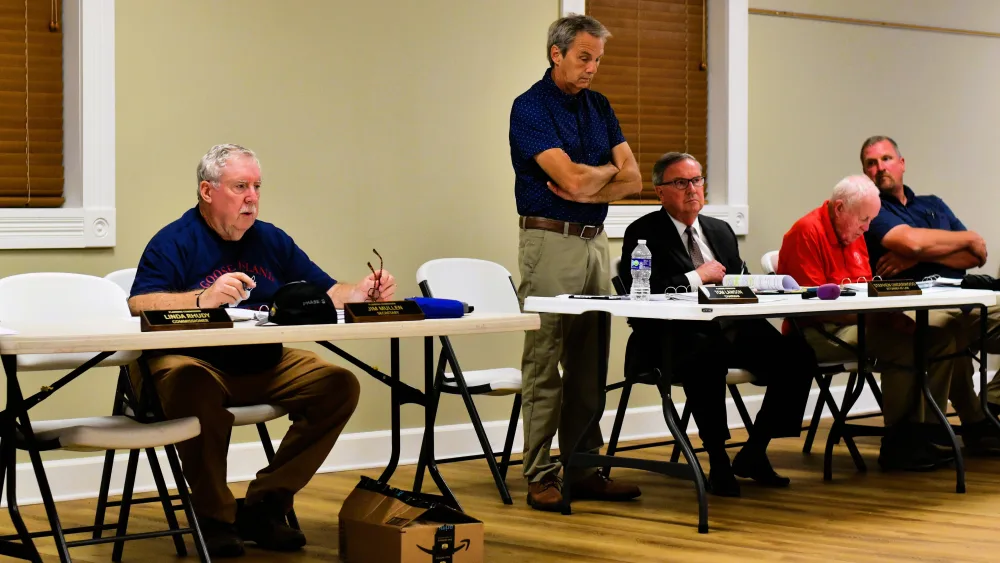
Underwood confirmed the application met all legal specifications, and the commission passed it unanimously, 7-0. Rick Clements and Linda Rhudy were not in attendance.
The next Cadiz-Trigg County meeting has been set for 6 PM, May 26.
FULL HEARING:
According to the American Cancer Society:
Health experts say there’s no strong evidence that cell phone towers pose a health risk, though research on long-term effects is still ongoing.
Cell towers, or base stations, use radiofrequency (RF) waves, a type of non-ionizing radiation that does not directly damage DNA like stronger forms such as X-rays or UV radiation. While very high RF levels can heat body tissue, the energy levels used in cell towers and phones are much lower.
Exposure to RF waves from towers is typically very low at ground level, often hundreds to thousands of times below federal safety limits set by the Federal Communications Commission (FCC). The strongest exposure occurs close to antennas, such as on rooftops, where access is usually restricted.
Major health organizations, including the World Health Organization’s International Agency for Research on Cancer, classify RF radiation as “possibly carcinogenic”, but evidence is limited and largely tied to heavy cell phone use—not tower exposure. Meanwhile, the U.S. Food and Drug Administration says current research does not support a clear link between RF exposure and cancer.
Studies on people living near towers have produced inconclusive results, and lab studies have not clearly shown how RF waves could cause cancer. Researchers note that exposure from cell towers is generally much lower than from using a cell phone.
As newer 5G networks expand, they use higher-frequency RF waves and more small, low-powered antennas placed closer to users. These signals don’t travel as far or penetrate the body as deeply, but experts say more research is needed to fully understand any potential health impacts.
Overall, scientists say current evidence does not show a clear danger from cell towers, but continued study—especially of long-term exposure—is recommended.