
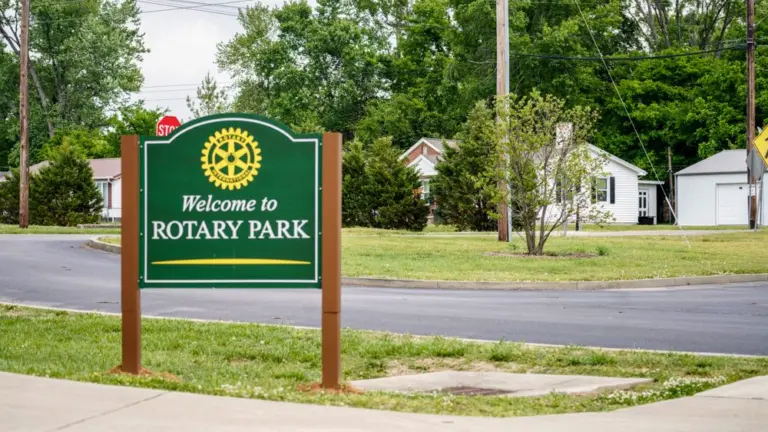
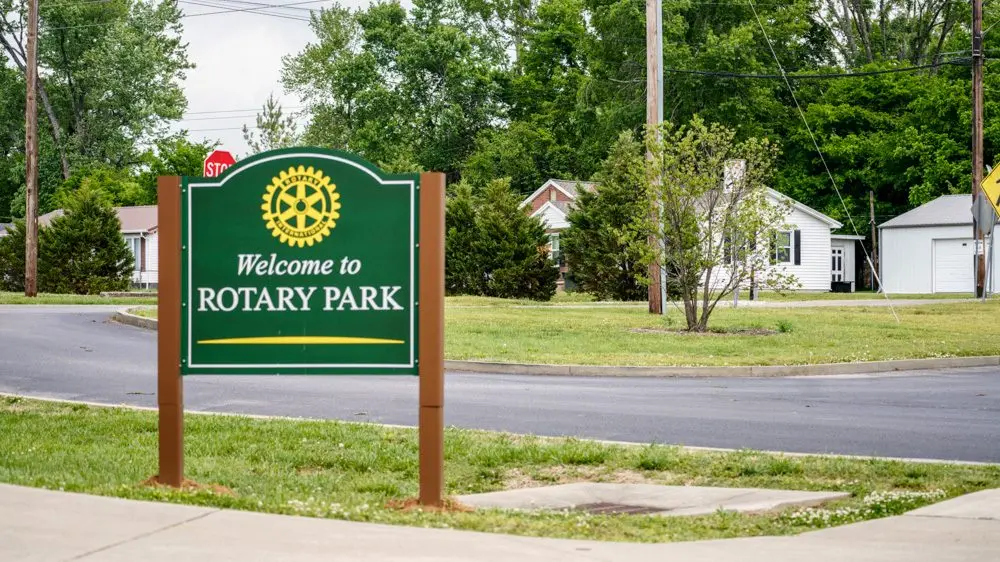
What unfolded Tuesday afternoon at Rotary Park was more than a ceremonial ribbon cutting. It was the culmination of years of planning, persistence and shared purpose — and a moment many in the community described as long anticipated.
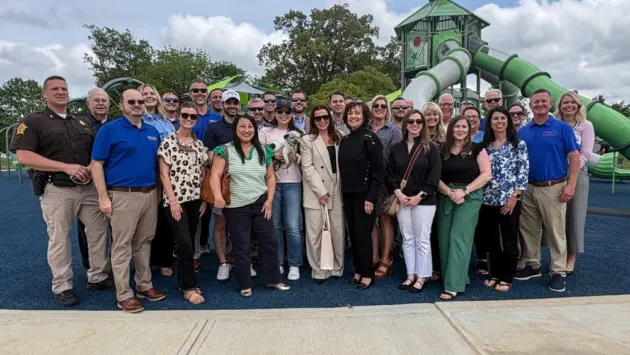
City leaders, Rotary members, donors and families gathered to officially open the park, anchored by the inclusive “Playtopia” playground designed for children of all abilities.
“It’s a big day, it’s a day we’ve all been waiting for. It’s a day that had a lot of anticipation in it,” said Toby Hudson, Superintendent for Hopkinsville Parks and Recreation.
That vision, Hudson said, guided the project from concept to completion.
“This project represents months, years of planning and hard work and collaboration, all centered around one goal,” he said. “And that goal is a space, to create a space that serves everybody, every single individual in Hopkinsville.”
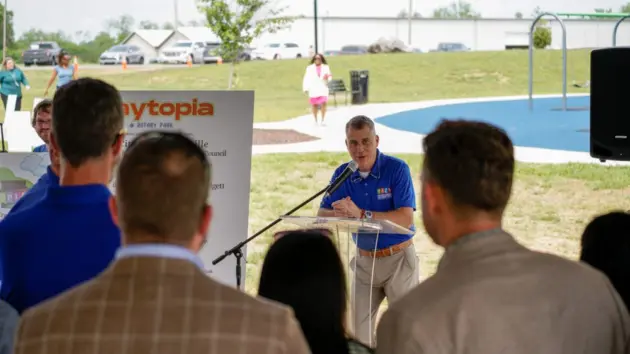
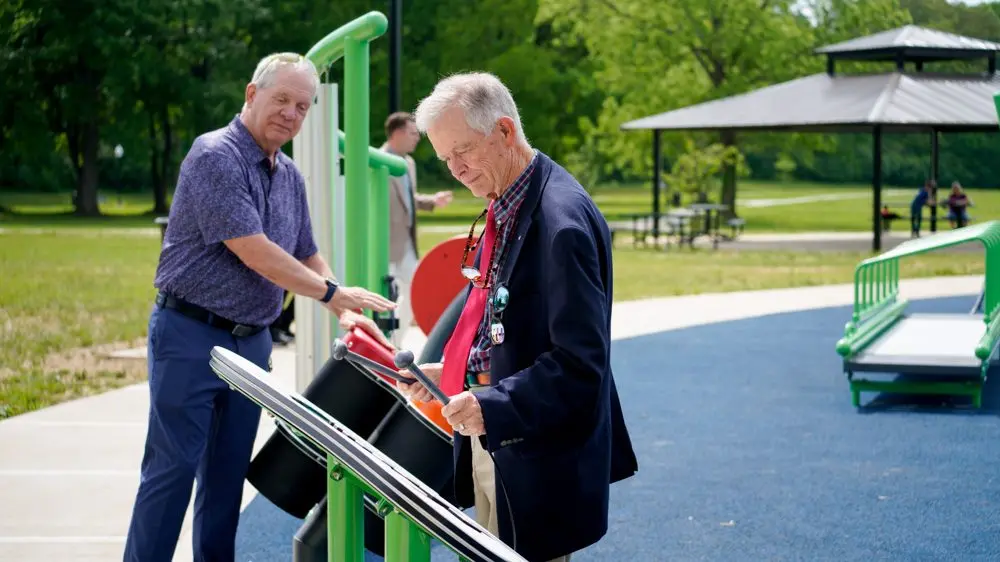
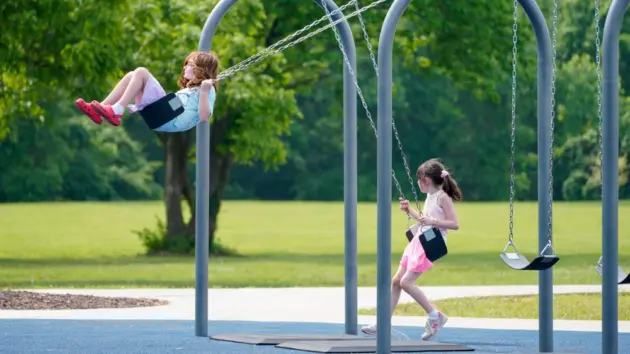
Behind him stood the centerpiece of that vision — a sprawling, fully accessible playground where ramps, sensory features and adaptive equipment allow children of all abilities to play side by side.
“Rotary Park is now a place where families can gather, children can play, and our community can connect,” Hudson said. “It ensures that children of all abilities have the opportunity to play side by side in a space designed specifically for them.”
The project brought together a broad coalition, including city government, the Rotary Club of Hopkinsville, private donors and community advocates.
“Without them, this would not be possible,” Hudson said, recognizing city leadership, staff, contractors and supporters. “Most importantly, we want to thank the families and the residents of Hopkinsville… these parks were built and are designed because of you.”
That sense of shared ownership was echoed by Councilman Michael Velez.
“This project represents what can happen when a community comes together with a shared vision,” Velez said. “This park is the result of true collaboration and commitment to our city.”
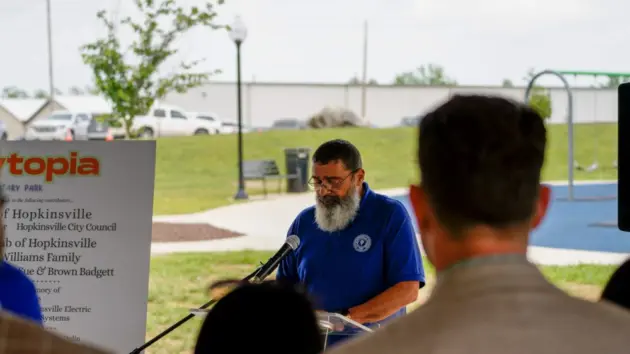
Velez emphasized the long-term importance of the park beyond its physical features.
“The new playground creates a space where children of all abilities can play together, learn from one another and simply enjoy being kids,” he said. “That is something we should all take pride in.”
He added that the park will serve as a lasting community gathering space.
“This park goes beyond just a playground,” Velez said. “It is a place where memories will be made and community connections will grow.”
For Holly Bivins, the park’s creation began with a personal experience that exposed a major gap in local accessibility.
Bivins said she first began thinking about the need for inclusive play spaces while spending time with her friend Whitney Holland and Holland’s twin daughters — one of whom uses a wheelchair.
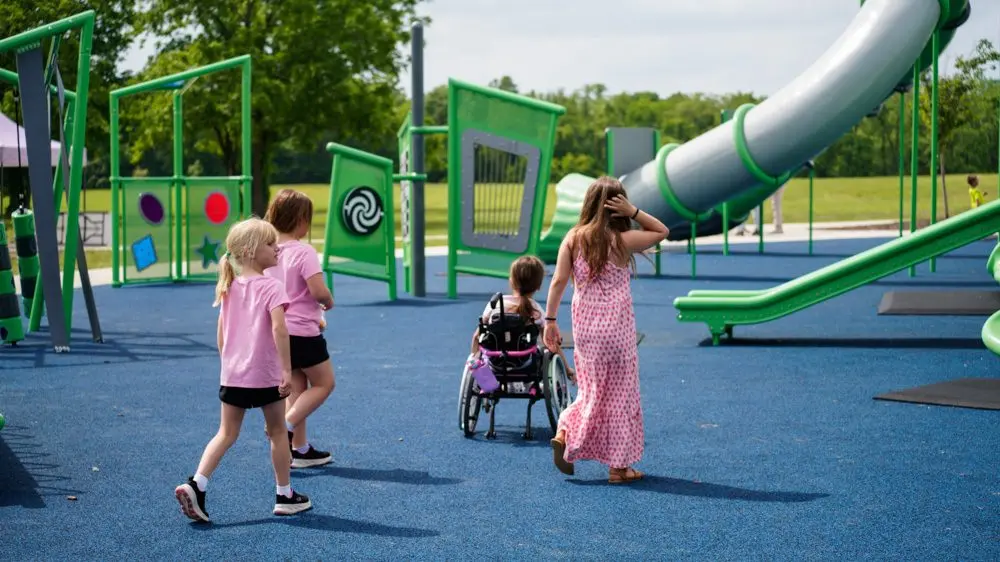
“I had some of my hardest days literally fighting for my life,” Bivins said. “I’d sit in the floor and I’d watch these amazing little twin sisters just playing and doing their thing.”
But she quickly realized that experience was not easily available in the broader community.
“I quickly learned through being able to experience and having a front row seat that that wasn’t exactly the same outside,” she said. “And it was like an hour drive for something like that to exist.”
That realization became the foundation for what would eventually become Rotary Park.
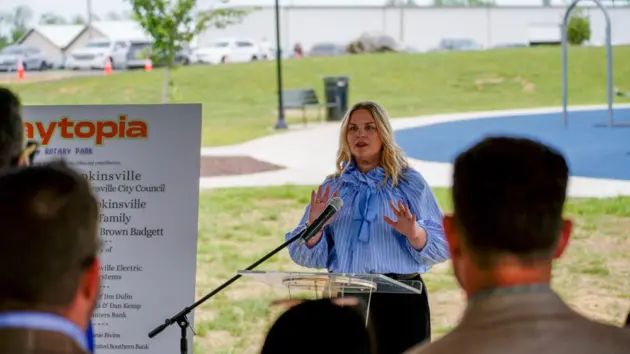
“One day Whitney and I were talking… she’s like, we just really need something like that close by,” Bivins said. “I was like, you know what? Yeah, we do.”
As conversations grew into a formal effort, Bivins said her understanding of inclusion also changed.
“I’ll be the first to admit that I was really short sighted,” she said. “Though I thought I knew and understood what inclusion is, that wasn’t inclusion at all… that was kind of creating a segregation.”
That shift helped shape the vision for a fully inclusive playground where children of all abilities could interact naturally.
She added that the project grew larger than originally imagined because leaders refused to settle for a minimal approach.
“We didn’t want to settle for something is better than nothing,” Bivins said. “We wanted it to be substantial.”
The Rotary Club of Hopkinsville played a central role in funding and supporting the project.
“This is something our community truly needed,” said Rotary President Landan Stallons. “An inclusive playground accessible to all children [is] exactly the kind of project we’re proud to support.”
He noted that the club’s annual fundraising efforts help make projects like Rotary Park possible.
“Because of you, we’re able to give back to impactful projects like Rotary Park,” Stallons said.
For Mayor James R. Knight Jr., the park represents both a milestone and a model for future investment.
“This ribbon cutting is more than just a ribbon cutting,” Knight said. “It is us working together, making a brighter place to live for Hopkinsville every day.”
He pointed to collaboration among the city, donors and community partners as the driving force behind the project.
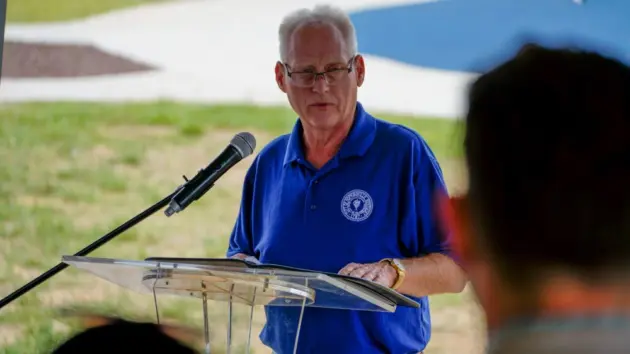
“When people come together and share a goal, good, great things happen,” he said. “And this here is a great thing for Hopkinsville.”
Beyond the playground, Rotary Park includes walking paths, green space and gathering areas designed to serve the community for generations.
“It’s our mission… to continue to create spaces that enhance our quality and bring people together,” Hudson said. “That is our drive and that is our mission.”
As families moved into the playground and the ribbon fell, the symbolism of the day was clear — a community effort rooted in inclusion, shaped by personal experience and sustained by collective commitment.
“This is your park,” Knight said. “Don’t let anybody ever forget that. This is your park… and be very proud of it.”