

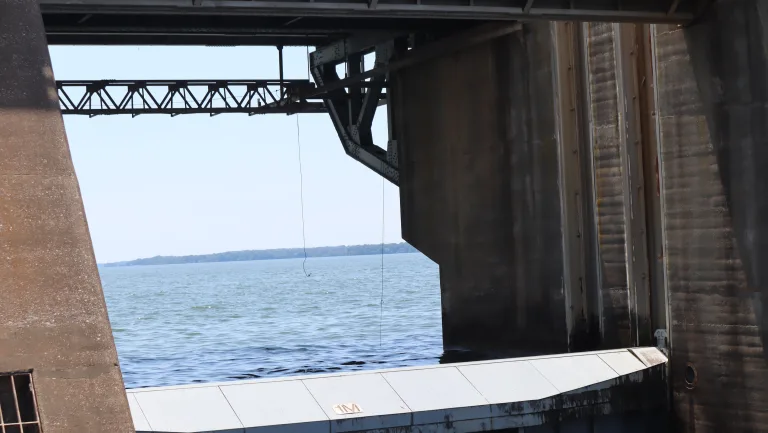
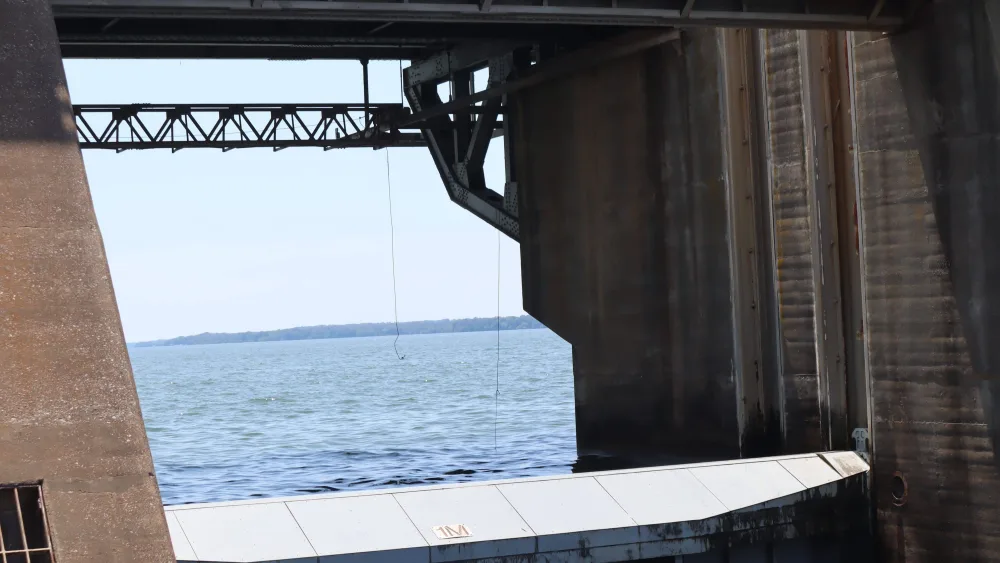
It might surprise some that officials with the Tennessee Valley Authority measure water flow in cubic feet per second, which is one foot by one foot by one foot and can hold about 7.5 gallons of liquid.
Kentucky Dam, on a regular release, moves at no less than 30,000-to-40,000 cubic feet per second — and it’s often faster if rain and runoff increase the reservoir.
Hence, there remains a major need for public education about boating, fishing and dam safety.
Ben Heath, water resource engineer for the Knoxville TVA River Forecast Center, said it’s easy to camp out near the concrete for the big catch in west Kentucky. But one has to be smart and safe about the decision.
Heath also noted that dam safety is more than just the rushing waters coming from gates and spillways.
Adam May, TVA spokesman, confirmed that new safety signage is coming to Kentucky Dam this summer.
The last time Kentucky Dam managed dangerously high lake levels and heavy rainfall, water was moving at nearly 267,000 cubic feet, or more than 2 million gallons of water, per second. That’s one Olympic-sized swimming pool every 2.5 seconds.
Kentucky Dam is the largest in the TVA fleet, and it’s one that’s part of the 5,498 megawatts responsible in the conventional hydroelectric grid. Since 1936, TVA dams have saved more than $10 billion in flood prevention, including $90 million just last year.