

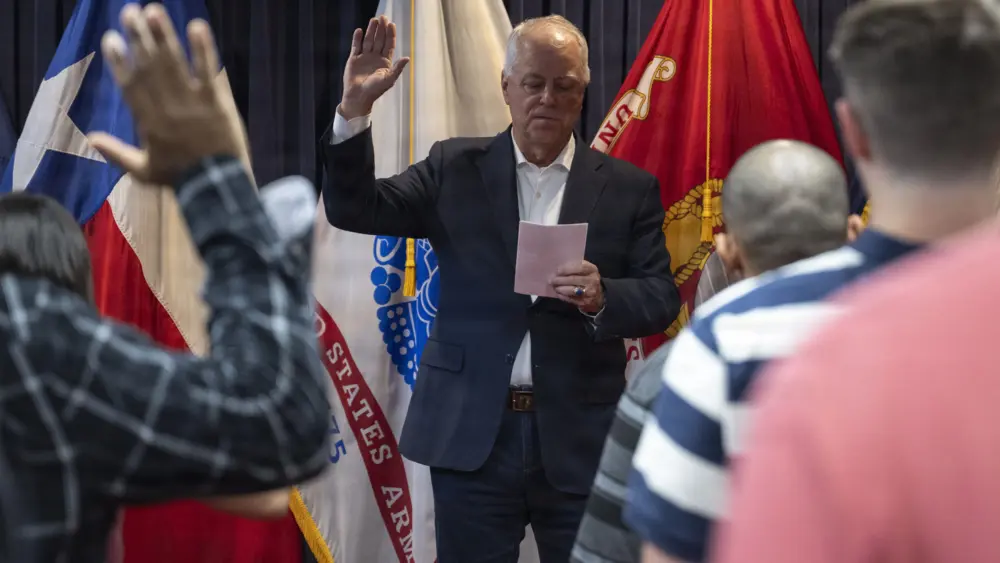
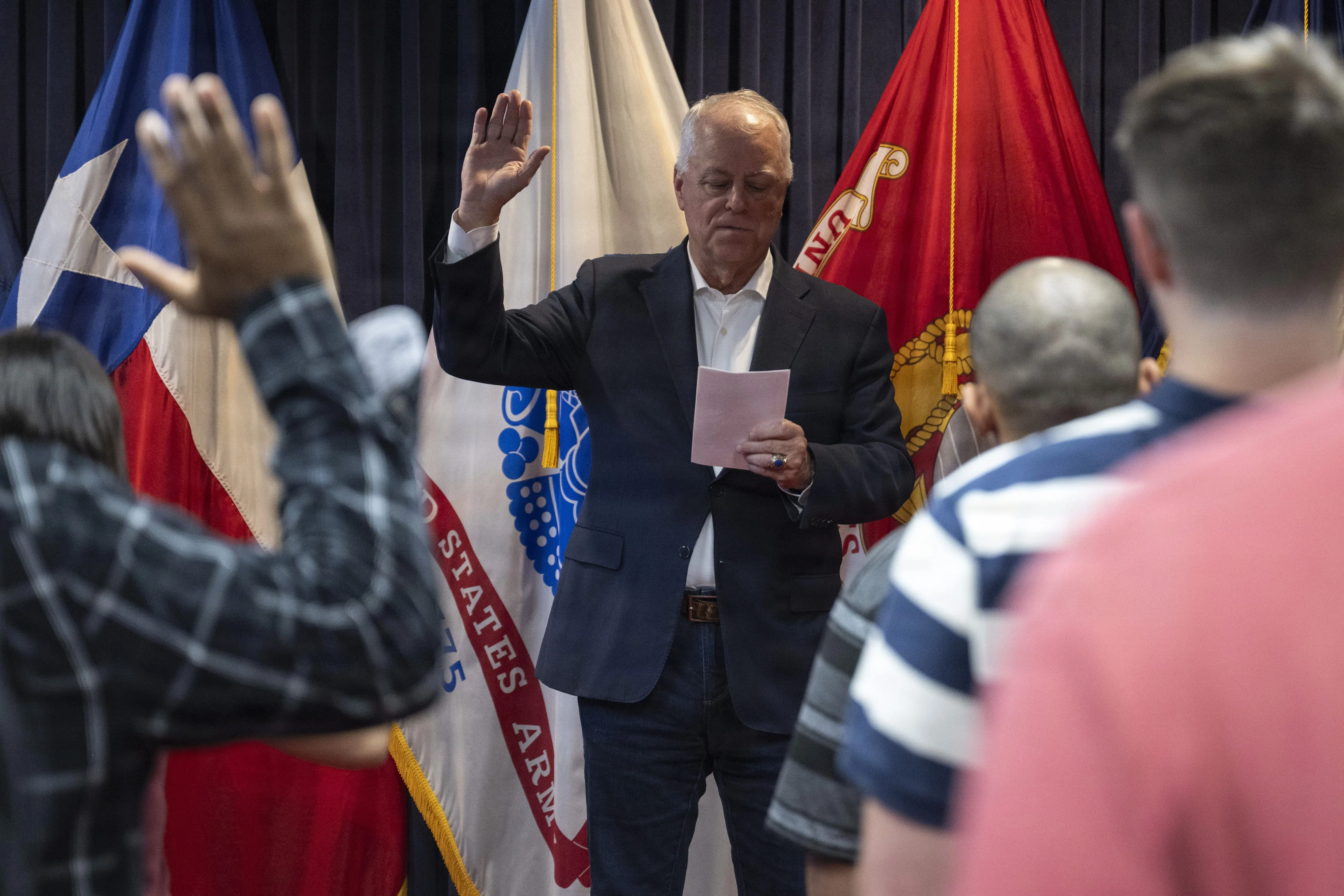
Under Secretary of War for Personnel and Readiness Anthony Tata, tours a Military Entrance Processing Station and gives the oath of enlistment to new Department of War recruits during Armed Forces Appreciation Day in Houston, Texas, March 4, 2026. (DoW photo by U.S. Air Force Staff Sgt. Milton Hamilton)
The U.S. military is increasingly turning to older recruits and expanding enlistment age limits, a shift driven by years of recruiting shortfalls and a shrinking pool of eligible young Americans.
Recent policy changes across multiple service branches have raised maximum enlistment ages and broadened waiver eligibility, allowing more Americans in their late 30s and early 40s to join the armed forces. The adjustments come as only about 23% of Americans ages 17 to 24 meet baseline military qualifications without waivers, according to Department of Defense estimates.
While federal law caps military enlistment at age 42, each branch sets its own limits. Historically, most services capped enlistment below that threshold.
Recent changes include:
- The Navy raising its maximum enlistment age to 41.
- The Air Force and Space Force allowing recruits up to age 42, the highest among branches.
Army and Navy officials have stated that these changes are not a lowering of standards but rather an effort to expand the eligible pool.
At the same time, the minimum enlistment age remains 17 with parental consent, or 18 without.
The policy shift is already showing progress in enlistment trends. The average age of new Army recruits reached about 22.7 in fiscal year 2026, up from roughly 21 a decade earlier.
Military analysts say the increase points to both expanded eligibility and changing demographics, as fewer younger Americans qualify or express interest in service.
To address recruiting challenges and shortfalls, the military has also expanded the use of waivers, which allow otherwise disqualified applicants to enlist under certain conditions.
Common waiver categories include:
- Medical waivers: for manageable health conditions
- Moral waivers: for minor criminal offenses
- Educational waivers: for applicants without traditional diplomas
- Physical fitness waivers: paired with preparatory training programs
Some branches have also introduced preparatory courses to help recruits meet academic and physical standards before entering basic training.
Additionally, the Navy has allowed a portion of recruits to score lower on entrance exams if they qualify for specific roles.
Defense officials have framed the changes as necessary adjustments rather than a relaxation of standards.
Army Secretary Christine Wormuth said in a previous interview that recruiting improvements are tied to structural changes such as “faster waiver processing” and better outreach efforts.
Analysts also point to broader actions — including enlistment bonuses, citizenship pathways for immigrants and targeted recruiting — as part of a strategy to rebuild force numbers.
Despite public speculation about a possible military draft, current law still requires nearly all men ages 18 to 25 to register with the Selective Service System.
A provision passed by the House in 2024 would automatically register men ages 18 to 26, modernizing the system but not reinstating conscription.
White House officials have said a draft is not currently planned. “It’s not part of the current plan right now,” a spokesperson said, while noting that future options remain open.
As the military adapts to recruiting realities, officials say older recruits can bring added maturity, education and work experience to the ranks.
The long-term impact of the higher enlistment age — and expanded waiver use — remains to be seen, but the changes mark one of the most significant shifts in military recruiting policy in decades.