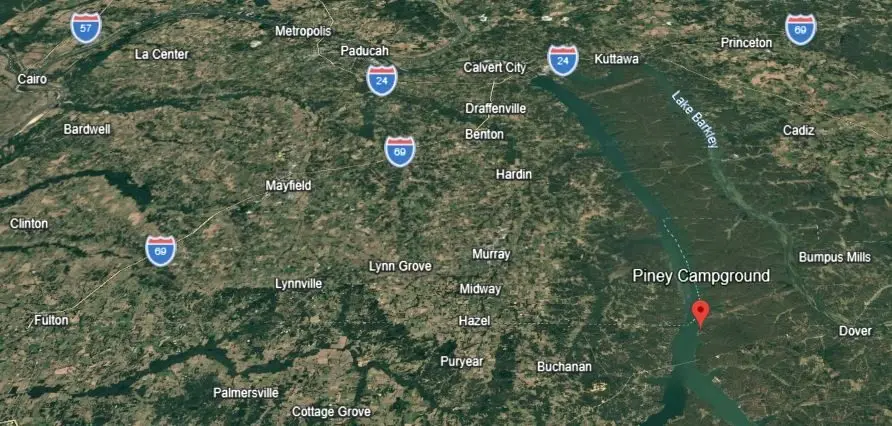

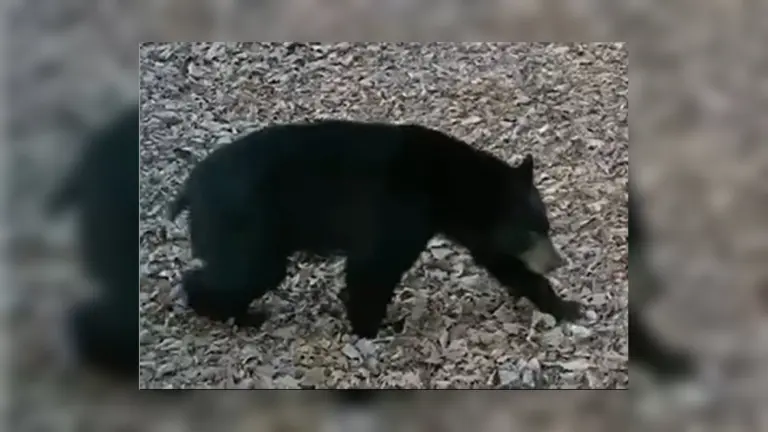
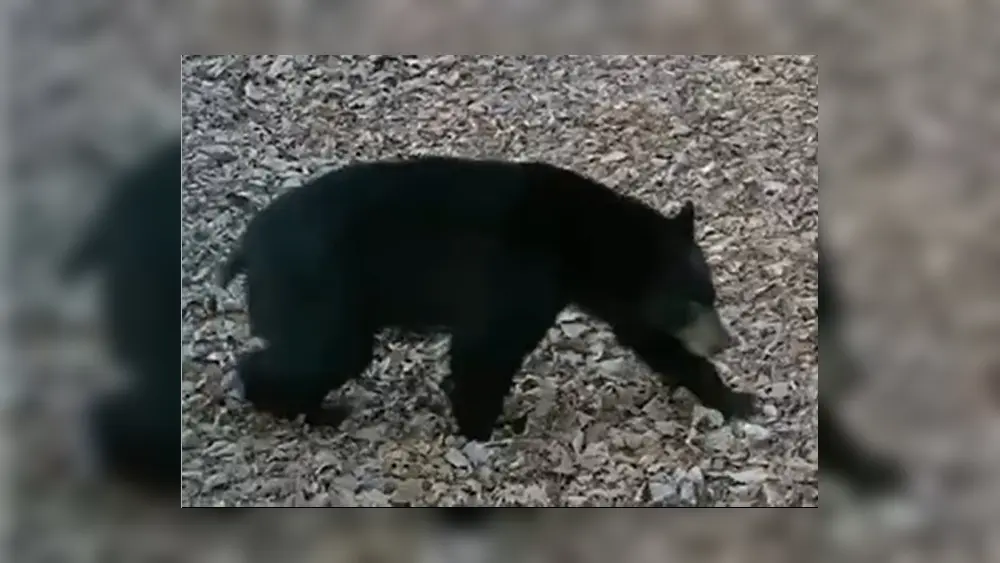
Officials with Land Between the Lakes and the U.S. Forest Service report a rare local sighting of a black bear Friday morning in Stewart County, Tennessee, captured on a hunter’s trail camera.
Wildlife staff say evidence suggests a small number of bears pass through the region each year, though they are seldom seen.
This bear was spotted near Piney Campground and the Fort Henry Trail System, prompting officials to urge hikers and campers to remain aware of their surroundings.
According to geology.com, the American black bear is the most commonly seen bear in North America, ranging from central Mexico to Alaska and across most of Canada. In the lower 48 states, populations are concentrated along the East and West coasts and in the Rocky Mountains. Generally considered timid and less dangerous than other bear species, black bears typically avoid people but may enter towns—especially at night—in search of food.
Despite their name, black bears can range in color from black to light brown, making size a more reliable identifier. Adult males can weigh from about 150 to 550 pounds, depending on food availability, and usually have larger ears than grizzly bears. Adults measure roughly 4 to 6 feet long; females typically weigh 120 to 170 pounds, while males average 250 to 350 pounds.
According to the Kentucky Department of Fish & Wildlife Management, black bears were once abundant across the United States, but were nearly wiped out in Kentucky by the early 1900s due to heavy logging, unregulated hunting, and a lack of protected habitat.
Over the past two decades, however, the species has made a significant comeback as forests regenerated. Bears naturally migrated into Kentucky from neighboring Appalachian states, creating a growing resident population—primarily in the eastern part of the state.
Black bears prefer forested habitats but can live near human settlements. They are omnivores, feeding on berries, nuts, insects, fish, small mammals, carrion, and occasionally garbage or pet food left outdoors. Bears are solitary, skilled climbers, and hibernate during colder months.
Officials emphasize safety if a bear is encountered: never approach, change direction if seen at a distance, and do not run. If a bear approaches, stand your ground, raise your arms to appear larger, and yell until it leaves. If attacked, fight back—do not play dead. Warning signs that a bear feels threatened include jaw popping, huffing, or swatting the ground; if observed, slowly back away while facing the animal.
Aggressive encounters should be reported immediately to the Kentucky Department of Fish and Wildlife Resources.