
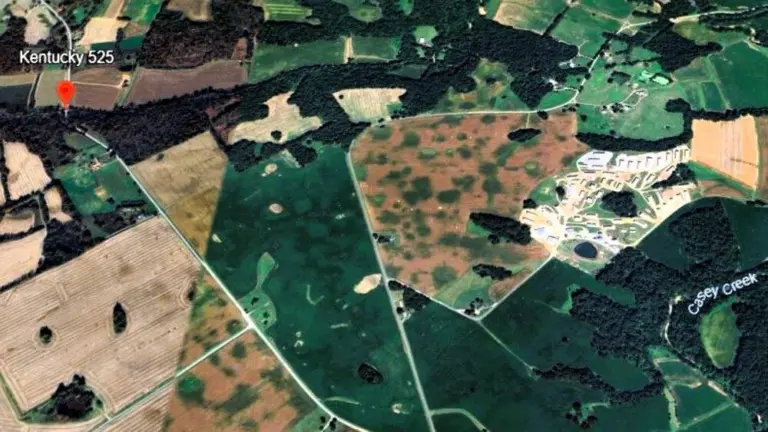
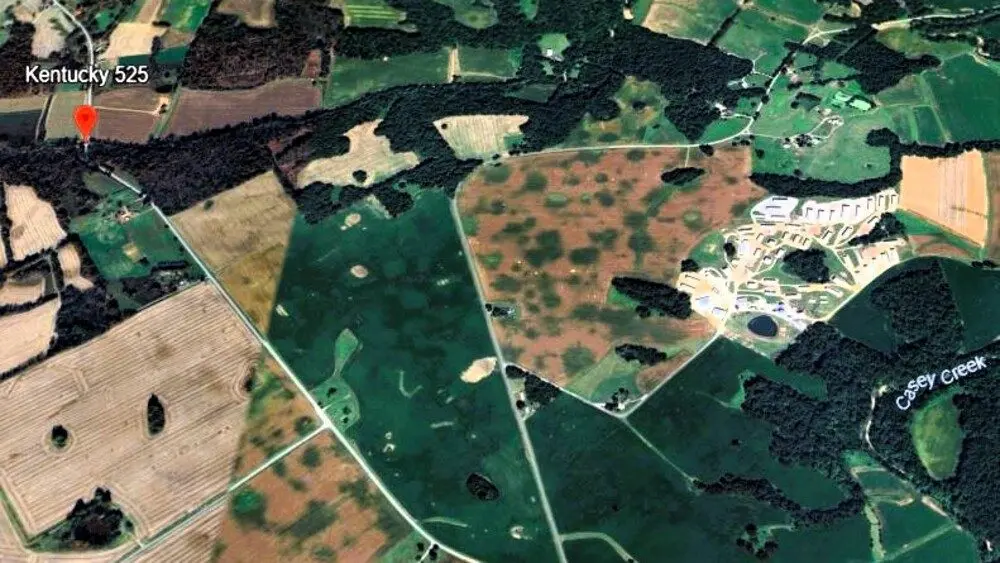
In May 2024, Trigg County experienced a tornadic event that caused significant damage along Kentucky 525 and, most notably, parts of Casey Creek.
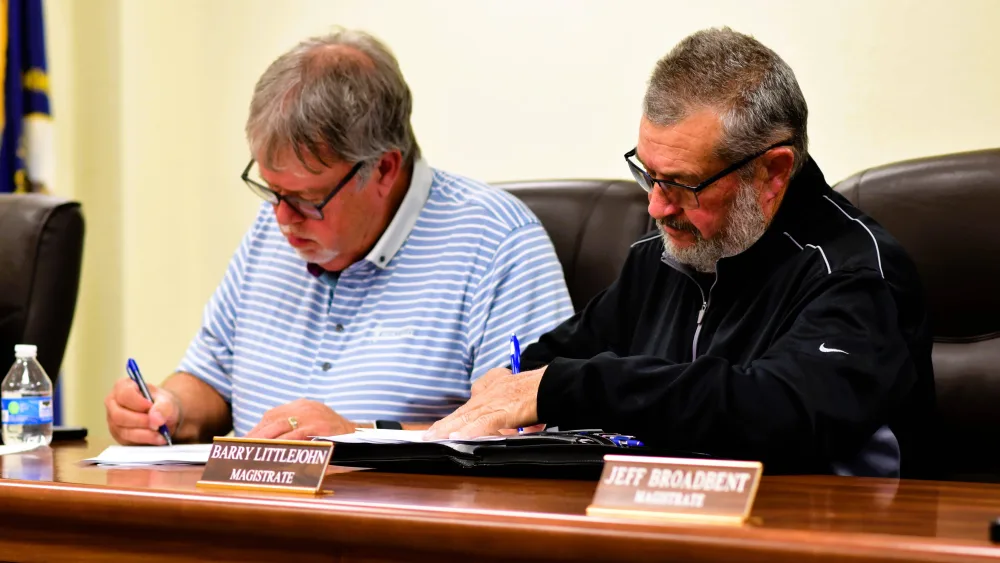
During Monday night’s fiscal court meeting, less than a week after reviewing the needed work with potential contractors, magistrates voted unanimously in favor to accept a bid valued at $14,750 from Perry’s Custom Dozing — in order to finally begin that cleanup process.
Judge-Executive Stan Humphries confirmed the county will enter into a USDA Natural Resources Conservation Service matching grant, in which Trigg will be responsible for 25% of the cost, or $3,687.50, and federal funds will absorb the rest.
A lot of the debris on the western side of the creek, Humphries added, was a “total loss.”
Work would have started much earlier, Humphries said, if not for two reasons: application times and extensions of the local and federal process, and a protected bat population.
In fact, according to the Kentucky Department of Fish & Wildlife, 16 species of bats have been documented in the Commonwealth, and three of them are federally endangered: the Virginia big-eared bat, the Indiana bat and the gray bat. A fourth, the Northern long-eared bat, listed as federally threatened.
In other court news:
+ Magistrates voted 6-1 in favor of adopting Senate Bill 63, which makes special-purpose vehicles and UTVs legal on roads, and supersedes Trigg County’s current “golf cart” ordinance if qualifications are met and licensing is acquired through Clerk Carmen Finley’s office. Jeff Broadbent was the lone “nay.”
Humphries and County Attorney Randy Braboy once again confirmed that opting into this law only brings clarity into county jurisdiction and purview, meaning it does not pertain to roads managed by Fort Campbell authorities, LBL and the City of Cadiz, nor does it permit owners to drive “special purpose vehicles” on roads with speed limits at 65 miles per hour or greater — most especially the key portions of US 68/80, and all of I-24.
+ Humphries took a few moments to reflect on recent news of the senior home-delivered meals plan, which has seen new life in the Commonwealth following the budget director’s decision to release $9.1 million of unspent research funds into this fiscal year.
+ A frequent visitor and concerned citizen of Trigg County, John Arnoldussen presented a poster depicting a screenshot of his physical altercation with former Sheriff’s Deputy Rob Schneider, before reciting a speech he wrote.
It was one minute and 17 seconds long, and it was a verbatim copy of the lyrics from Buffalo Springfield’s “For What It’s Worth.” A Top 10 rock hit in 1967, and written by Stephen Stills, it’s oft-mistaken as anti-authoritarian, anti-war rhetoric penned for the purposes of decrying The Vietnam War, when actually, at least according to American Songwriter, Stills crafted it as a response to the 1966 Sunset Strip curfew riots in Los Angeles.
Not long after Arnoldussen’s spiel, his magistrate, Mike Lane, suggested the court soon take up discussions about public comments.
According to ky.gov, public comment periods are not mandated by the Open Meetings Act, and are often offered simply as a courtesy. Only local school boards are required to set aside at least 15 minutes for public comments during regular meetings, because of provisions under House Bill 121 allowing parents, staff and students to bring matters of the district to attention.
Trigg County’s public comment requirements are scant, though that may soon change. For example, in Madison County Fiscal Court, total public comment lasts only 20 minutes. Residents wishing to speak must sign in prior to the meeting’s start, and list their topic and agenda item of interest. Any distributed materials are placed in a basket, and handled by court staff, where USB devices and other digital media are not accepted.
From there, each speaker states their name, their address and gets three minutes to share thoughts. Time can be yielded to others waiting, but no singular speaker has more than six minutes.